
In practice · 2026-10-10 · 6 min read
Evidence at sea: why marine insurance is a test case for digital witnesses
In marine insurance, a photo of damaged cargo can decide who pays. The hard part comes months later, when someone has to show that the photo was taken when and where they say it was, and hasn't been touched.

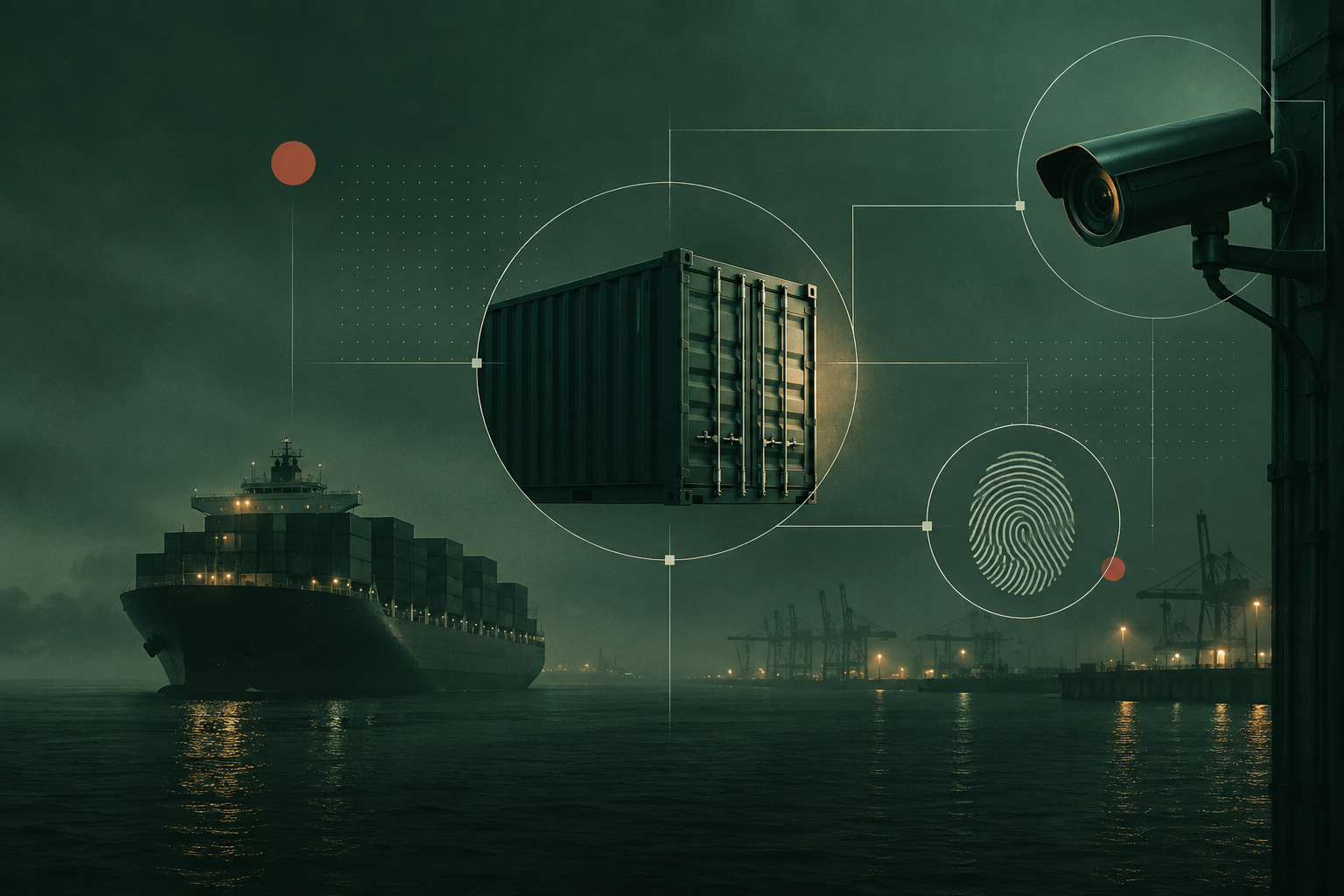
Why evidence quality decides claims
A container arrives damaged. A shipment goes missing. Cargo gets wet on the quay. In marine insurance, the photo a surveyor takes on the day often decides who pays for it months or years later [1].
The problem is not the photo. The problem is trust. By the time a claim is disputed, the surveyor who took the photo may have moved on, the device may have been replaced, and the other party's lawyer will ask how we know the image hasn't been edited. A file with today's timestamp can just as easily have been created today.
That is the evidence question in a business where photos, videos, survey reports and bills of lading can travel through several hands, across borders, before they turn up in a settlement discussion or a courtroom.
What usually goes wrong
The usual route for evidence in marine insurance is straightforward. A surveyor photographs damage, writes a report and emails it to the insurer. The insurer forwards it to the claims handler, who may send it to a lawyer or an adjuster. At each step, the file is copied, renamed and sometimes converted.
When a claim is challenged, three questions come up. Was the photo taken when the surveyor says it was? Was it taken where they say it was? Has anyone changed it since?
Metadata can help. A camera records the time a photo was taken and, if GPS is enabled, the location. But metadata is easy to strip or alter, and anyone with access to the file can change it. A screenshot or a scanned copy loses the metadata altogether.
The person who took the photo can testify, but memory fades and people leave. What is needed is a record of the evidence that nobody, including the person who created it, can quietly rewrite.
What IUMI's film shows
IUMI, the International Union of Marine Insurance, has a series of short films for the marine insurance industry called Digitalisation in practice [2]. One of them, published in 2024, looks at the ASD.DigitalWitness app, which runs on WitniumChain [3].
The app is straightforward. A surveyor uses it to photograph damage, capture video or attach documents. When the photo is taken, the app seals it together with the time and, if the surveyor wants, the GPS coordinates. The photo and its metadata stay on the device. What gets sealed is a fingerprint of the file, small enough to transmit in a second, even on a slow connection.
Anyone the surveyor shares the photo with later can check that it hasn't changed. The check compares a fresh fingerprint of the file with the sealed one. If they match, the file is exactly as it was when sealed. Change a single pixel and the fingerprints won't match.
The film runs just under five minutes and shows a surveyor using the app on a wet quay to photograph containers. It explains what gets sealed, when and why, and how the check works. It is aimed at people in the industry, not at technologists, and it assumes no prior knowledge of fingerprints, chains or cryptography.
What it shows is that sealing evidence at capture is practical. It takes one tap. The photo stays with the surveyor. The person receiving it can verify it without asking anyone for permission.
How it works in practice
The thing to seal is the photo, the video or the document file at the moment it is captured or attached, together with the time and, if the surveyor chooses, the GPS coordinates. Sealing takes a fingerprint of the file, not the file itself, so the content never leaves the surveyor's device or the organisation's systems.
When the surveyor shares the file with the insurer or a claims handler, they also share the witness record, which includes the fingerprint, the timestamp and, if applicable, the location. The recipient can check the file against the sealed fingerprint at any time. If it matches, the file is unchanged. If it doesn't, someone has altered it or the wrong file has been sent.
That gives both parties a neutral record. The surveyor can show that the photo they are presenting is the one they took on the day, without anyone having to take their word for it. The insurer can show a court or an adjuster that the evidence they relied on was the original, sealed when it was captured.
Checking the file is something anyone with the file and the witness record can do, without asking the surveyor, the insurer or the platform that sealed it. The check is a calculation, not a request. That means it works years later, even if the surveyor's company has closed or the original device is long gone.
What the witness doesn't do is show that the photo is what someone claims it shows. A photo of a damaged container, sealed at 10:00 on 15 March 2025 at a given GPS location, proves that the file is unchanged since then. It doesn't prove that the container in the photo is the one named in the claim, or that the damage happened before the photo was taken. That still requires a surveyor's judgment and, often, other evidence.
It also doesn't settle disputes on its own. Parties can still disagree about what the photo means, or whether the surveyor was in the right place at the right time. What it does is remove one argument: that the evidence might have been changed along the way.
What this means for you
If you work in marine insurance, claims handling or surveying, the questions to ask are practical.
First, when a claim is disputed a year after the event, can you show that the photo or the survey report you are relying on is the one created on the day, unchanged? If the answer is no, or if it depends on metadata that may have been stripped, sealing at capture gives you a record that holds up.
Second, who in your organisation can edit or replace files between capture and submission? If the answer is several people, or if files move through systems where access controls are loose, a sealed record makes the chain of custody simpler to explain.
Third, do your surveyors work in places where connectivity is poor or intermittent? Sealing a fingerprint takes a fraction of a second and works over a slow connection, because only the fingerprint is transmitted, not the file.
Fourth, how do you explain to an adjuster or a court that your evidence is trustworthy? Saying "our surveyor is honest" is not evidence. A sealed photo with a timestamp and a GPS coordinate that anyone can check is.
The film is short, practical and worth sharing with anyone in your organisation who handles evidence. It is aimed at marine insurance, but the idea works just as well in other lines where photos, documents and reports get questioned later.
What to watch
IUMI's film series Digitalisation in practice includes other episodes on topics like blockchain in trade finance and digital twins. The series is available on IUMI's website and YouTube channel [2].
For anyone building tools for insurers or surveyors, the approach shown in the film is not tied to one app. The same idea, sealing evidence at capture, works through a REST API, an SDK or an MCP server that any system can call. The content stays with you. The first 2,000 witnesses a month are free.
Marine insurance is a good test case because it is hard. Evidence is captured in the field, often on devices with limited connectivity, and it travels through multiple hands across jurisdictions before it is used. If sealing works there, it works almost anywhere.
Sources
- [1]The role of evidence in marine insurance claims, IUMI, 2024
- [2]Digitalisation in practice, IUMI, 2024
- [3]IUMI film: ASD.DigitalWitness, IUMI, 2024