
Sector · Legal
Cases · 2026-11-02 · 5 min read
Deepfake evidence in court: how to *spot fakes and defend yours*
In a 2024 California case, a court found two video exhibits were deepfakes and threw out the case. It's a useful reminder that courts now scrutinise digital evidence more closely, and that metadata matters.

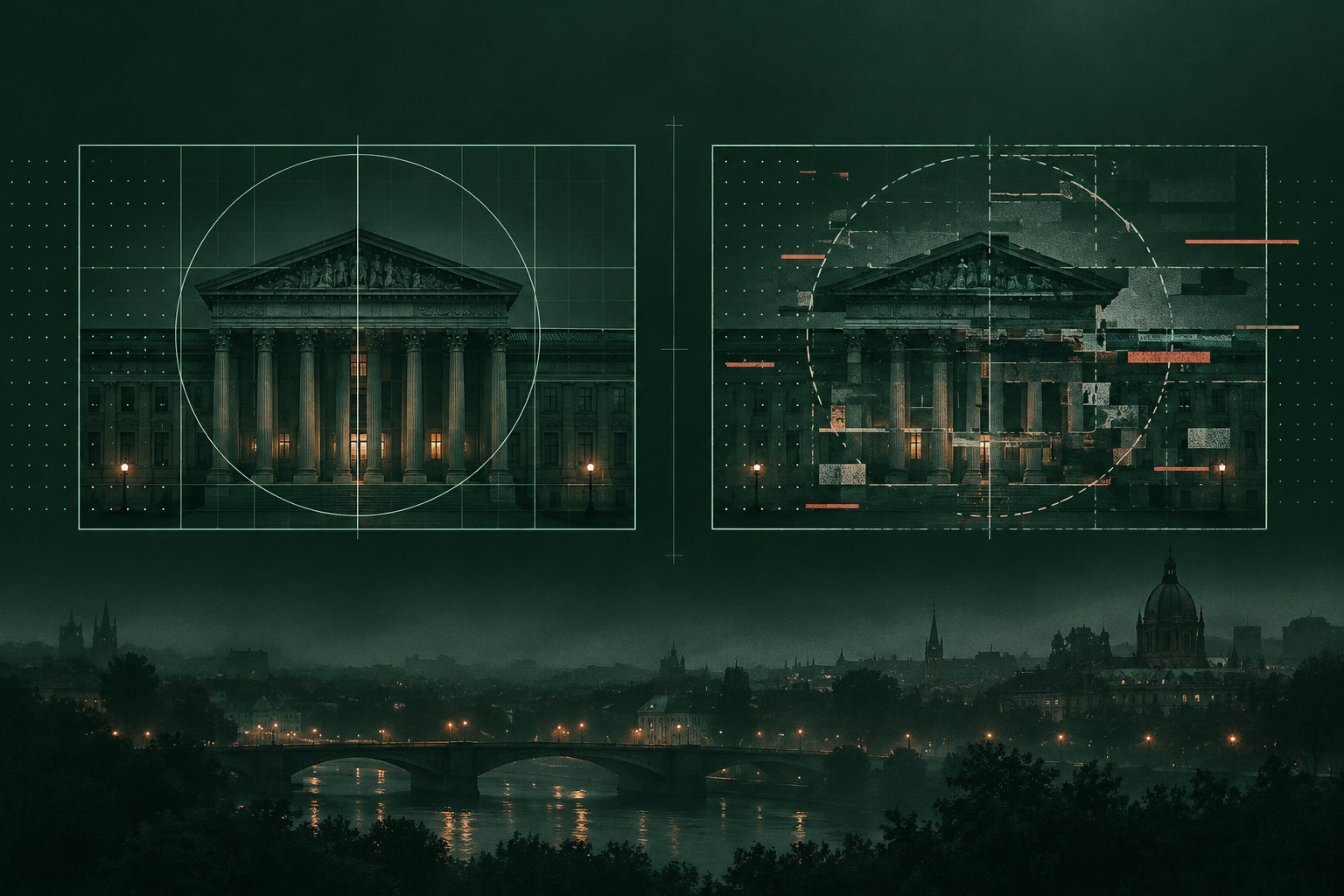
When a court calls your evidence fake
In October 2024, Judge Evelio Grillo of the Superior Court of California, County of Alameda, granted terminating sanctions against a plaintiff who had submitted what the court found to be deepfake video evidence [1]. The plaintiff, Mr Mendones, had sued his former employer, Cushman & Wakefield, for wrongful termination and discrimination. Two video clips he submitted as evidence—one purporting to show a Zoom meeting, the other a conversation at a bar—turned out not to be what he said they were.
The court didn't just exclude the evidence. It dismissed the entire case. That's a terminating sanction: the most severe remedy available for discovery abuse [1]. It's rare, and it sends a message.
The case is a useful reminder that courts now look at digital evidence the way border control looks at passports. If the metadata doesn't add up, or if forensic analysis shows signs of tampering, the evidence won't get through.
What the court found
The defendant's forensic expert examined the two videos and their metadata. The expert found that both files had been created shortly before they were produced in discovery, not on the dates the recordings were supposedly made [1]. One video appeared to have been edited multiple times. The audio in one clip didn't match the video. The lighting and background in another didn't fit the claimed setting.
Think of metadata as a receipt. When you take a photo with your phone, the file carries information about when it was taken, what device took it and sometimes where. If you later edit the photo and save it again, the metadata changes. A forensic examiner can often tell. In this case, the receipts didn't match the story.
The court also noted that the plaintiff had been evasive during depositions and had delayed producing the videos [1]. By the time he handed them over, the defence had already raised concerns about their authenticity.
Judge Grillo concluded that the videos were "more likely than not" deepfakes, created or altered using AI to mislead [1]. Under California's discovery rules, a party that submits fraudulent evidence can face sanctions. Here, the court found that lesser sanctions wouldn't be enough, because the false evidence went to the heart of the case.
Why metadata and provenance matter
The case turns on two things: metadata and provenance. Metadata is the technical trail a file leaves. Provenance is the story of where the file came from and how it got to you.
When you rely on a recording, a document or a photo in a dispute, the other side will ask: how do we know this is real? Courts want to see a clear chain of custody. They want to know the file was created when you say it was, on the device you say it was, and that nobody has edited it since.
For organisations, that means thinking about evidence before there's a dispute. If your system records a decision, a conversation or an event, ask yourself: if someone challenged this a year from now, could we show it's the original?
What this means for you
If your organisation captures or stores digital evidence—recordings, documents, logs, photos, videos—here are three questions worth asking:
Do we preserve the full metadata? Metadata gets lost when files are copied, converted or moved between systems. Check whether your workflow keeps it intact.
Can we show when something was recorded? A timestamp inside a file can be changed. A record sealed at the moment of capture can't.
What happens if the evidence is questioned? Courts and regulators increasingly expect organisations to prove provenance. Decide now who would do that, and how.
The best time to think about this is before you need it. Once a file is in dispute, it's too late to go back and establish its history.
How a digital witness helps
In a case like Mendones, the problem was that the plaintiff couldn't show the videos were real. The metadata said one thing, the story said another, and the court sided with the metadata.
A digital witness works the other way round. It gives you a way to prove a file hasn't changed since the moment it was created.
Here's what you seal: a fingerprint of the file at capture—whether that's a photo taken in the field, a recording saved by a customer service system or a document produced by an AI agent. The fingerprint is sealed on WitniumChain, which records when it was sealed and links it to the file. The file itself stays with you.
To check it later, you calculate the fingerprint again. If it matches the sealed one, nothing has changed. If someone edits even a single pixel or a single character, the fingerprint won't match.
Anyone you share the file with can run the check: your legal team, an auditor, the other side in a dispute or a court-appointed expert. They don't have to trust you, because the check is independent.
What it doesn't do: it doesn't prove the content is true, or that the recording shows what you say it shows. It proves the file is the one that was sealed at that time. In a case where authenticity is challenged, that's often the difference between evidence that's admitted and evidence that's thrown out.
You can seal files through the REST API, the SDK or the MCP server. The content never leaves your systems. The first 2,000 witnesses a month are free. Full documentation is at witniumchain.com/docs.
How it would work
- At capture: your app or device takes a fingerprint of the file and seals it with one API call. You get a witness ID back.
- Later: when the file is questioned, you share the file and the witness ID with whoever needs to check it.
- They check: they calculate the fingerprint and compare it with the sealed one. Match means unchanged.
What to watch
Article 50(4) of the AI Act requires users who create or manipulate images, audio or video that constitute a deepfake to disclose that the content is artificially generated or manipulated [2]. That rule applies from 2 August 2026. It's aimed at deepfakes: content that resembles real people, objects, places or events and would wrongly appear to be authentic.
The rule doesn't say how to make the disclosure, but it does say it must be clear. For works that are obviously artistic, creative, satirical or fictional, it's enough to disclose in a suitable way that such content exists, without disrupting the work.
The Mendones case shows what can happen when digital evidence is challenged and found wanting. Courts are getting better at spotting fakes. The question for organisations is whether they can prove their evidence is real.
Sources
Mendones v. Cushman & Wakefield, Case No. RG23124781, Superior Court of California, County of Alameda, Order on Motion for Terminating Sanctions, 8 October 2024. Available at TrueScreen: https://truescreen.io/articles/deepfake-evidence-in-court/
Article 50(4) of Regulation (EU) 2024/1689 (AI Act). Available at: https://ai-act-service-desk.ec.europa.eu/en/ai-act/article-50
Sources
- [1]Mendones v. Cushman & Wakefield, Order on Motion for Terminating Sanctions, Superior Court of California, County of Alameda, 2024-10-08
- [2]Article 50(4) of Regulation (EU) 2024/1689 (AI Act), European Commission AI Act Service Desk
- [3]Regulation (EU) nr 910/2014 (eIDAS), Article 41, EUR-Lex